How to Make a Small Balcony Feel Cozy
A small balcony can become one of the most enjoyable areas of your home. With a few thoughtful choices, you can create a comfortable spot for morning coffee, reading, fresh air, or quiet evenings. The key is to focus on comfort, function, and a sense of warmth without overcrowding the space.
You do not need a large budget or a complete renovation. Simple additions such as a compact seat, outdoor lighting, plants, and soft textiles can make a noticeable difference. Here are practical ways to make your small balcony feel cozy and inviting.
Start With a Clear Purpose
Before buying furniture or decorations, think about how you want to use the balcony. A space designed for morning coffee may need only a small table and one comfortable chair. If you want a place to read or relax, a cushioned bench or lounge chair may be more useful.
Consider these questions:
– Will you use the balcony alone or with guests?
– Do you need space for meals, reading, or working?
– Is the balcony exposed to sun, wind, or rain?
– Do you need to move or store furniture regularly?
– Which items are most important to you?
A clear purpose helps you avoid filling the balcony with pieces that look nice but are not useful. In a small area, every item should serve a purpose whenever possible.
Choose Furniture That Fits the Space
Furniture size has a major effect on how open or crowded a balcony feels. Measure the available area before shopping, including the width of doors and any space needed to walk safely.
Look for furniture designed for small spaces, such as:
– Folding chairs and tables
– Narrow benches
– Stackable stools
– Wall-mounted drop-leaf tables
– Compact bistro sets
– Storage benches
– Lightweight lounge chairs
Folding furniture is especially useful because you can put it away when you need more floor space. A small bench can also be more efficient than two separate chairs, particularly when it includes hidden storage.
Try to leave a clear path from the door to the balcony railing. Avoid placing large pieces where they block the entrance or make the area difficult to move through. A simple layout with one main seating area often feels more comfortable than several small pieces spread around.
Add Comfortable Seating
Comfort is one of the most important parts of a cozy balcony. Even a simple chair can feel inviting with the right cushion or pillow.
Choose outdoor cushions made from weather-resistant fabric. These materials are designed to handle sunlight and occasional moisture better than indoor textiles. If your balcony is covered, you may have more flexibility, but it is still helpful to choose fabrics that are easy to clean.
Consider adding:
– A seat cushion
– One or two outdoor pillows
– A small footstool
– A soft outdoor throw for cool evenings
– A washable floor cushion
Keep the number of pillows limited so the seating remains practical. Choose a few coordinated colors rather than many competing patterns. For example, neutral furniture can be warmed up with cushions in green, blue, terracotta, or mustard.
Use Soft Lighting
Lighting can quickly change the mood of a small balcony. Bright overhead lights may feel harsh, while soft, layered lighting creates a warmer atmosphere.
Good options include:
– String lights along a railing or wall
– Battery-powered lanterns
– Solar lights
– Small LED candles
– Clip-on lights
– A compact outdoor table lamp
String lights are popular because they add warmth without taking up floor space. Attach them securely and keep cords away from areas where people walk. If you use candles, choose enclosed designs or flameless LED versions for a safer, low-maintenance option.
Aim for more than one light source if possible. A small lantern near the seating area and string lights above can make the balcony feel more balanced and welcoming.
Bring in Greenery
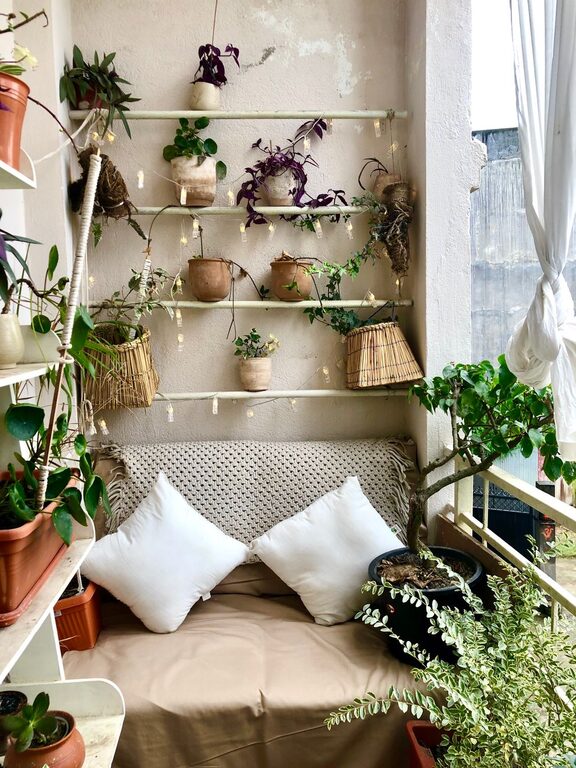
Plants make a balcony feel more lively and connected to the outdoors. They can also add privacy, color, and texture without taking up much floor space.
For a small balcony, consider:
– Hanging planters
– Railing planters
– Vertical plant stands
– Wall-mounted pots
– Narrow plant shelves
– Small herb containers
Use the balcony’s light conditions as a guide. Sun-loving plants need several hours of direct light, while shade-tolerant varieties are better for covered or north-facing balconies. Choose containers with drainage holes, and use saucers where appropriate to help protect the floor.
Group plants at different heights to create visual interest. A tall plant in one corner, a few medium-sized pots, and a trailing plant on a shelf can make the space feel fuller without making it cluttered.
If you do not have time to care for live plants, use a few high-quality artificial plants or dried arrangements. Natural-looking greenery can still add warmth and color.
Create Privacy and a Sense of Enclosure
A balcony can feel less relaxing if it is completely exposed. Adding some privacy can make the space feel like a small outdoor room.
Possible solutions include:
– Outdoor curtains
– Bamboo or reed screens
– A folding privacy panel
– Tall plants
– Trellis panels with climbing plants
– A fabric shade sail
Choose a solution that allows enough airflow and does not interfere with building rules or safety requirements. Curtains can soften the look of a balcony, while a plant screen adds both privacy and greenery.
You do not need to block the entire view. Even partial coverage on one side can make the seating area feel more private and protected.
Add an Outdoor Rug
An outdoor rug can make a small balcony feel more finished and comfortable. It helps define the seating area, adds color, and softens hard flooring.
Choose a rug made for outdoor use and select a size that fits without covering drains or creating a tripping hazard. A small rectangular rug under a table and chairs can visually organize the space. For a narrow balcony, a runner may work better.
Neutral patterns are easy to coordinate, while stripes or geometric designs can add personality. Make sure the rug can dry properly after rain, especially if the balcony is uncovered.
Use Color and Texture Thoughtfully
Small spaces often feel cozier when they include a few repeated colors and textures. You might combine wood, woven materials, metal, fabric, and greenery to create depth.
Try building your color palette around two or three main shades. For example:
– Warm wood with cream and green
– Black metal with beige and terracotta
– White furniture with blue and natural tan
– Gray seating with soft yellow and leafy green
Texture is just as important as color. A woven basket, ribbed planter, textured cushion, or natural-fiber rug can make the balcony feel more comfortable without adding visual clutter.
Make Use of Vertical Space
When floor space is limited, look upward. Walls, railings, and the area above furniture can provide useful storage and decoration.
Install shelves for small plants, lanterns, or decorative items. Use hooks for folding chairs, gardening tools, or a small watering can. A wall-mounted table can provide a dining or work surface while folding flat when not in use.
Before attaching anything, check whether drilling is allowed and use outdoor-rated hardware. In rental homes, removable hooks and freestanding shelves may be better choices.
Keep Clutter Under Control
A cozy balcony should feel inviting, not crowded. Limit decorations to items that are useful, meaningful, or especially attractive.
Use baskets or a storage bench to keep cushions, blankets, and gardening supplies organized. Choose pieces that can withstand the local weather, and bring delicate items indoors when necessary.
At the end of each season, review what you actually use. Removing unused furniture and decorations can make the balcony feel larger and easier to maintain.
Finish With Personal Details
The final touches are what make the balcony feel like your own. Add a favorite color, a small piece of artwork, a patterned cushion, or a tray for drinks and snacks.
Keep personal decorations suitable for outdoor conditions. Framed prints should be protected from moisture, and lightweight objects should be secured in windy areas.
A small balcony does not need many accessories to feel special. One comfortable seat, warm lighting, a few plants, and a well-chosen textile may be enough to create a peaceful retreat.
By choosing items carefully and using the available space efficiently, you can turn a compact balcony into a cozy extension of your home. Focus on comfort first, then add light, greenery, texture, and personal touches to create an outdoor space you will enjoy every day.

Related Posts
How to Choose Calm Colors for Your Home